What time of day does the Penguin Parade start at Phillip Island? It kicks off just after sunset – and since that exact time changes every single day of the year, you’ve got no chance of catching it by the clock.
I’m Paul, and I’ve spent years driving tourists down the South Coast of Victoria, seeing the same mistake being made time and time again – people plan their visit according to the numbers instead of the actual conditions. Give that a try & you’ll either end up showing up too early and getting sandblasted by the wind… Or, you’ll show up late , by which point the first of the Little Penguins has already waddled on by.
These Little Penguins spend their days hanging offshore, waiting for the cover of darkness. Once the light drops, they come in fast, but not in some big staged affair – this is more like small groups making quick decisions & moving on.
Summer months: around 8:30 – 9:00 pm Winter: get here a bit earlier – more like 5:15-6:00 pm
The simple rule is to follow the sunset, not some dodgy Google guess from last year.
Contents
- 1 Why Nature is Very Much In Charge Out There
- 2 Seasonal Timing Patterns
- 3 What You’re Actually Going to See
- 4 When The Experience Feels Most Magical
- 5 Choosing Where to Sit Without Regret
- 6 Turn It Into A Pretty Cracking Phillip Island Day
- 7 Where To Eat Before The Beach
- 8 What To Bring So You Stay Comfortable
- 9 Getting There Without Losing Your Rag
- 10 Small Details That Can Really Make A Big Difference
- 11 Paul’s Final Thoughts
- 12 FAQ
Why Nature is Very Much In Charge Out There
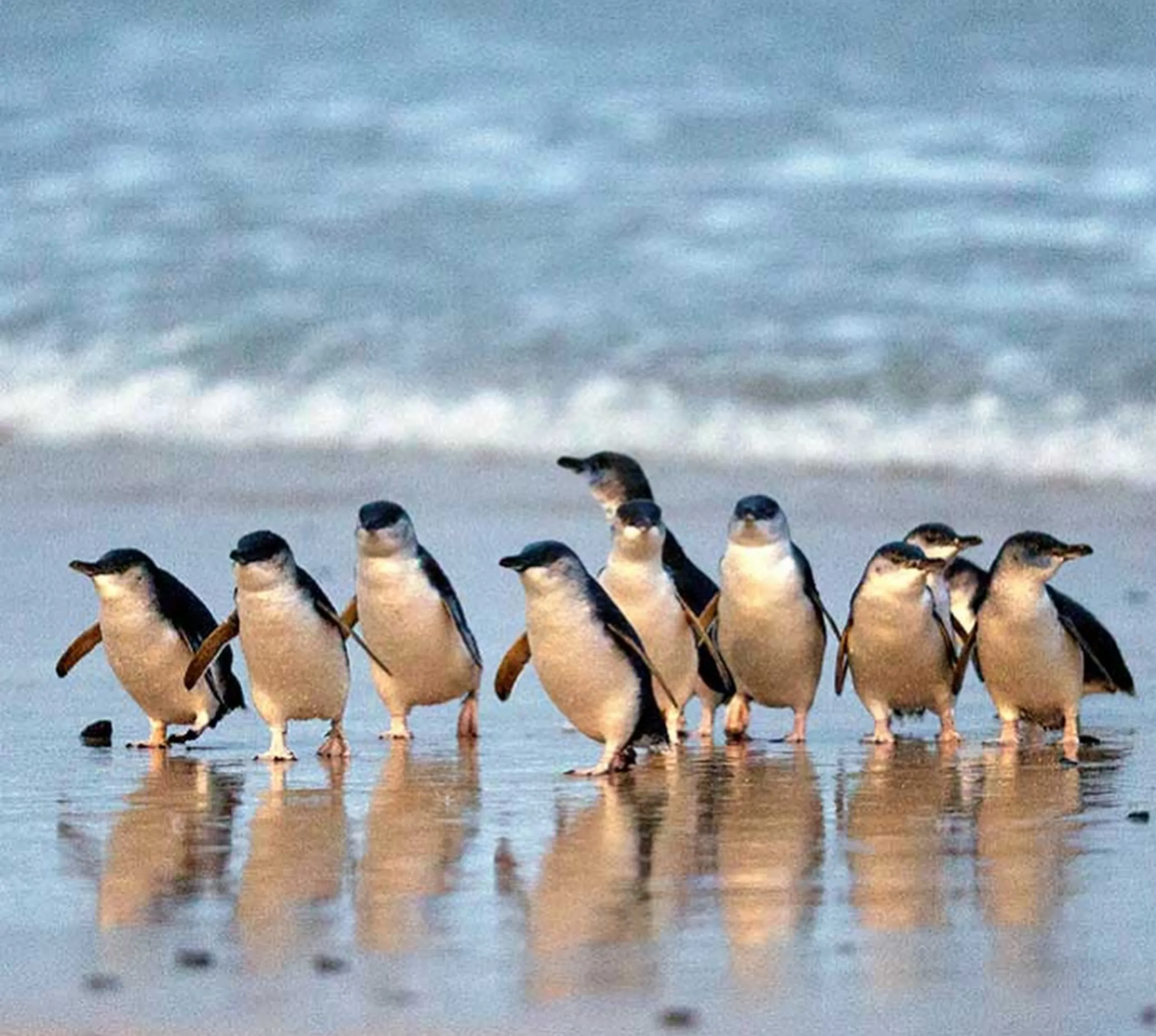
We’re not running a show here – it’s all about real wildlife, doing things the way they’ve always done them. And that means the timing can’t be bargained with
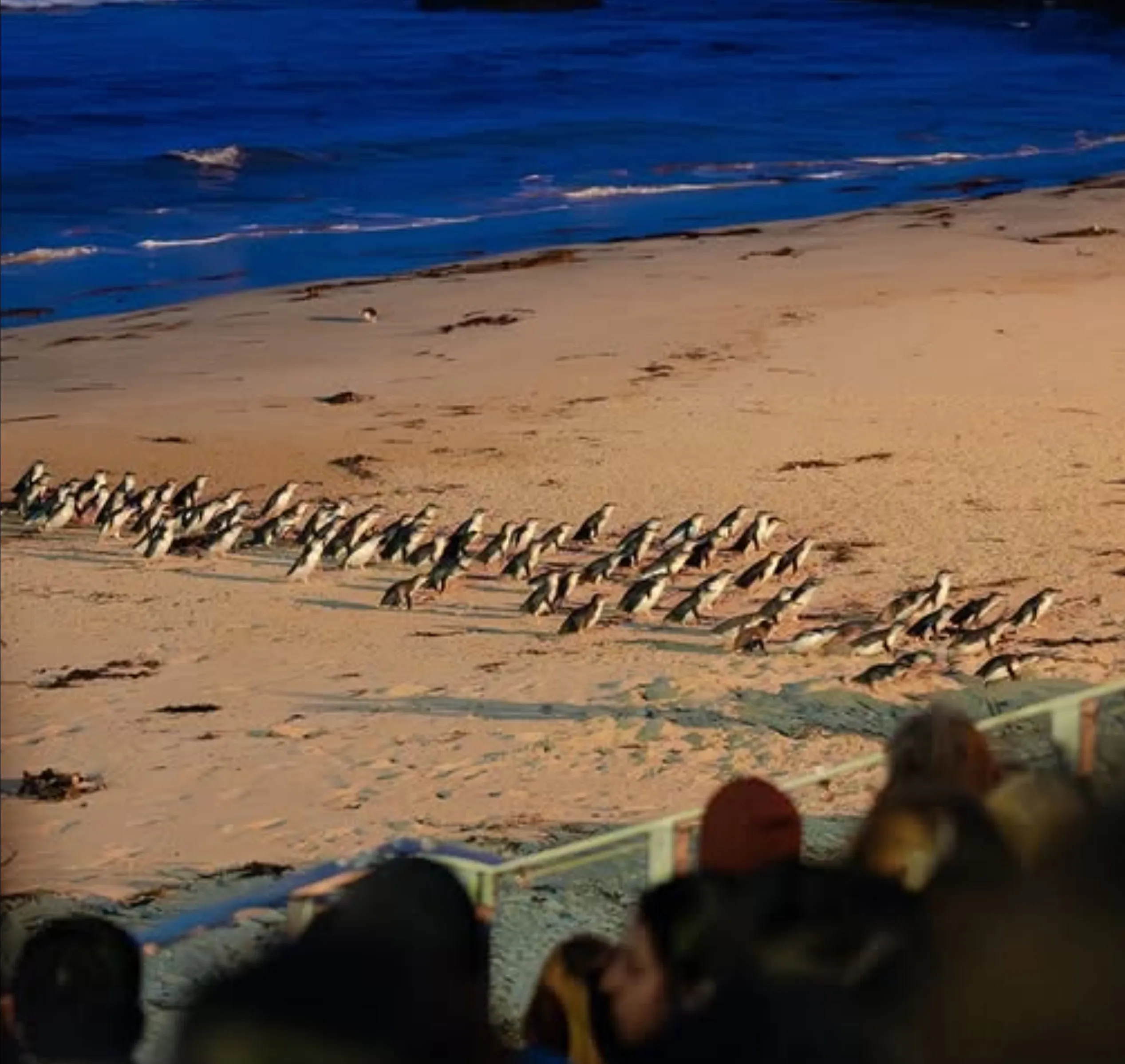
Out by Summerland Beach, the penguins sit in groups waiting for the light to fade before making a move – only once it’s dark enough do they start making their way in
Even the best wildlife tour operators won’t dare to give an exact minute, a simple reason is that nobody can.
There are a few things that can try & nudge the timing a bit – like if there’s loads of cloud cover, that’ll bring the penguins in a bit earlier. Or if the moon is shining brightly, that might delay them. And sometimes the sea can be a bit rough, which will slow them down. And if the penguins are in breeding mode, then that’ll get them moving a bit more quickly.
I’ve had times when they’ll pitch up right on cue, and others where we’ve all just sat there wondering if they’d given up for the night. That unpredictability is just part of the fun.
Seasonal Timing Patterns
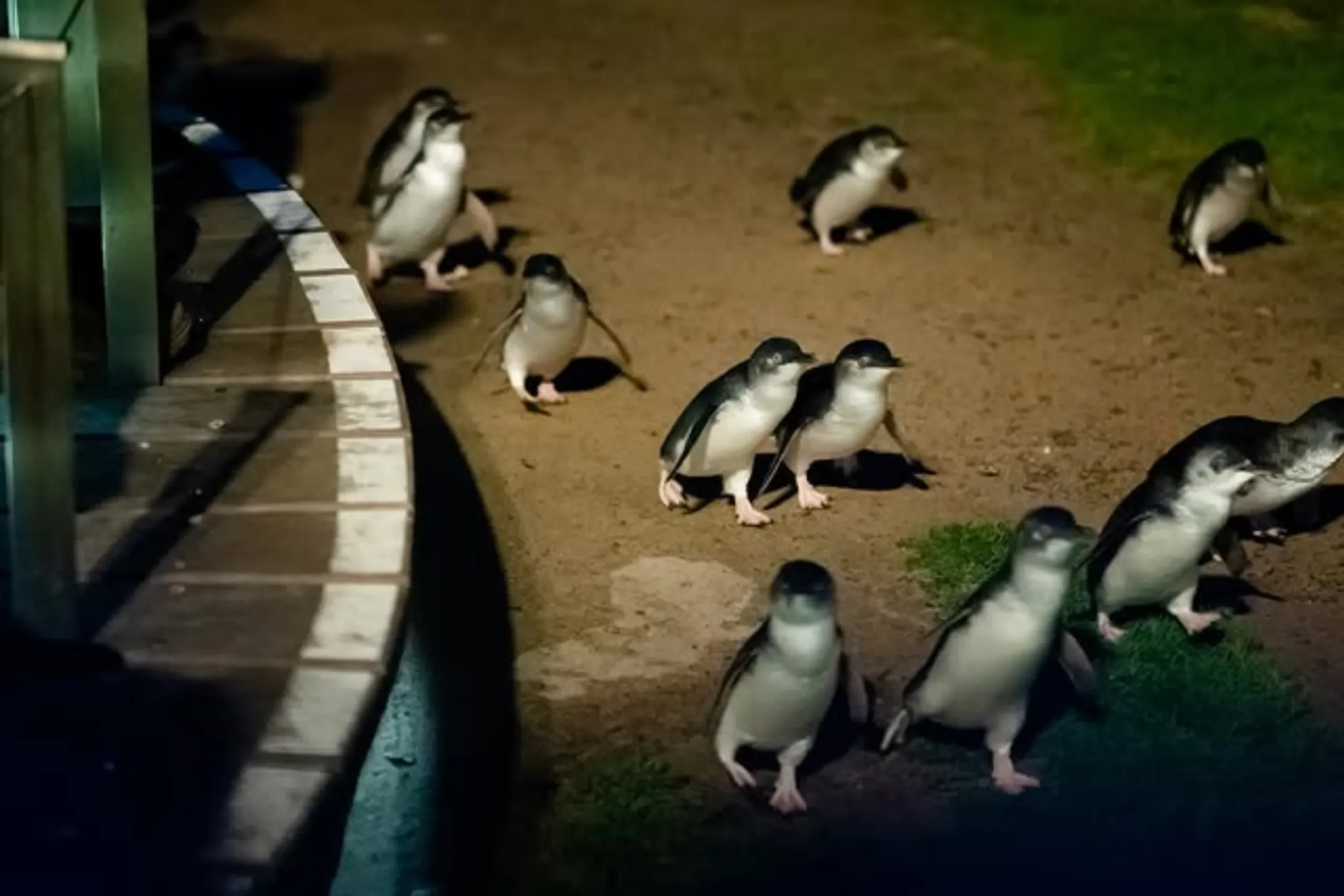
You won’t get an exact time dead on a month in advance, but you can get a general idea of when the Penguin Parade is likely to kick off by looking at how quickly the light changes at Summerland Beach.
| Month | Typical Arrival Window | Sunset Range |
| January | 8:45–9:15 pm | ~8:30 pm |
| February | 8:15–8:45 pm | ~8:00 pm |
| March | 7:30–8:00 pm | ~7:30 pm |
| April | 6:45–7:15 pm | ~6:45 pm |
| May | 5:45–6:15 pm | ~5:45 pm |
| June | 5:15–5:45 pm | ~5:15 pm |
| July | 5:30–6:00 pm | ~5:30 pm |
| August | 6:00–6:30 pm | ~6:00 pm |
| September | 6:30–7:00 pm | ~6:30 pm |
| October | 7:00–7:30 pm | ~7:00 pm |
| November | 7:30–8:00 pm | ~7:30 pm |
| December | 8:15–8:45 pm | ~8:30 pm |
From the experience, the safest approach is to bring a bit of common sense to the table: Get to the spot with an hour to spare before sunset and make sure you’ve got a good spot sorted before the first penguins start showing up. During school holidays and public holidays, factor in a bit of extra time – things get crazy in a hurry.
What You’re Actually Going to See
If you’re expecting some sort of grand entrance, you’re in for a surprise. It starts off quietly.
You’ll see a ripple in the water and then just one tiny penguin shape. It’ll waddle up the sand, stop, take a look around like it’s trying to work out whether this is a good idea or not – and then it’ll make a decision.
And then a few more will follow.
It’s not like a big flock all at once – there are around 30,000 Little Penguins there, but they come in waves, rather than all at the same time.
After the penguins make their beach crossing, the real magic happens along the treetop boardwalks, where you can watch them making their way back to their burrows, often just metres away from you.
When The Experience Feels Most Magical
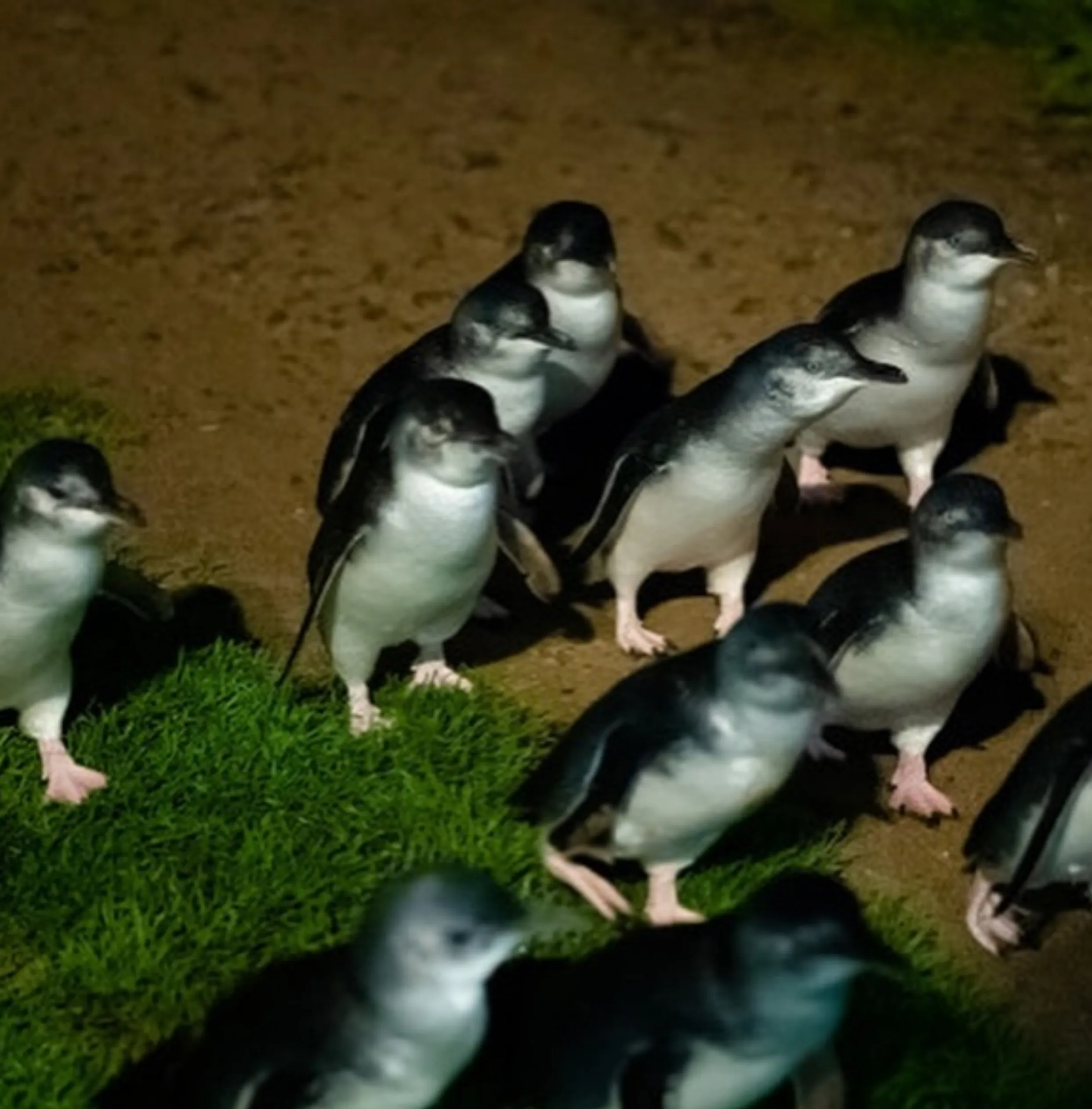
When you time your visit right across the year, you’ll notice a big difference in what you get to see.
From September to February, the action really ramps up. It’s breeding season after all, so you will see penguins crossing the beach more often and generally a lot more movement going on. Parents are feeding their chicks, so they’re motivated to get going.
But from May to August, things slow right down. You will still see penguins, but in smaller numbers. The upside is fewer crowds and earlier viewing times. The downside is it can be properly cold – the sort of cold that penetrates a jacket if you’re not prepared.
During molting season, usually late summer, penguins are more often to be found on the beach replacing their feathers. That can give their routines a bit of a twist, but you’ll still have a good time.
Choosing Where to Sit Without Regret
Where you sit actually makes a lot more difference than most people realise.
The general viewing area is fine, but it fills up quickly, and you’ll be stuck sharing the space with a bunch of other people. Penguins Plus gives you closer access to the main landing zones with fewer people around, and Underground viewing lets you get eye-level with a penguin world behind glass – it’s a great spot for families or if the weather is rubbish.
If you’re only going to do this once, don’t be stingy. A better vantage point makes the whole experience a lot better.
Some Wildlife Tours have upgraded access or guided penguin tour options which can really simplify things – especially if you’re in a rush.
Turn It Into A Pretty Cracking Phillip Island Day
The penguin parade might be the main event, but we all know there’s so much more to this stunning island than just a quick in and out.
Get the day started by chucking on your walking boots and exploring the coastline. Cape Woolamai‘s got to be one of the standout spots – it’s rugged, it’s wild, and it’s bloody beautiful without all the crowds mucking it up. If you’re still after a beach fix, Smiths Beach, Flynns Beach, Berrys Beach, and Cowes Beach have their moments – just don’t forget the wind and the swell are major players in the equation.
If you’re looking for something a bit more relaxed, why not head on over to Churchill Island to get a glimpse into the island’s farming history? Or put on your animal lover’s hat and swing by the Phillip Island Wildlife Park to get up close and personal with the locals.
By late arvo, make your way to the Nobbies Centre to take in those sweeping coastal views out to Seal Rocks – talk about being spoilt for choice with thousands of Australian fur seals to keep you company. On a clear day, they look like a living, breathing carpet just waiting to be gazed at.
Want to really push the boat out? You can get on a seal-watching cruise, or pop on a scenic flight – or even sign up for a guided wildlife walk to really get under the skin of this place. Not a full-blown Aussie wildlife safari, but a pretty big chunk of it nonetheless.
Where To Eat Before The Beach
Timing your food is just as important as timing the parade.
Eat too late, and you’re stuck watching from the sidelines – eat too early, and you’re begging to be distracted by a rumbling tummy.
In Cowes, you’ve got some top options to get your teeth into – like the Island Burger Bar for a quick fix, or The Lost Cowe for a sit-down meal that won’t leave you feeling rushed. If you need to eat a bit earlier, Phillip Island Winery‘s the place to go.
Best of all? Eat before you head to Summerland Beach and avoid queuing up with the crowds near the penguin parade.
What To Bring So You Stay Comfortable
The weather on Phillip Island can be as unpredictable as a spoilt toddler – even in the middle of summer.
Once the sun dips below the horizon, the temperature plummets – and with wind coming straight off the ocean, it gets cold in no time.
Bring a proper, decent jacket to throw on, something for your head, and, ideally, a blanket to snuggle up in. A waterproof layer won’t do any harm either – because trust us, the coastal weather has a nasty habit of changing its mind.
The security guys are kept busy here, too, making sure the area is safe for the penguins and the marine life. No flash photography, no bright torches – it’s all part of the plan to protect these cuties and their home.
Getting There Without Losing Your Rag
Phillip Island’s about 140 kilometres from Melbourne – a straight two-hour drive without traffic.
But of course, we need to live in the real world.
In summer or on public holidays, traffic can get a bit hairy heading out of the city and onto the island. So the best bet is to leave mid-afternoon, when the roads are a bit clearer.
Or, you know, just book a private tour or one of those organised Wildlife Tours and let them sort out the timing, transport and entry for you – that way you can just sit back and enjoy the ride.
Small Details That Can Really Make A Big Difference
Even if you’ve double-checked the official website, there are a few sneaky things that are worth knowing about.
Wind direction makes a bigger difference to how comfortable you’ll be than the actual temperature. A northerly wind tends to be pretty calm, whereas a southerly one can be pretty biting. If you sit closer to where most people land, you’ll get a better view, but if you hang around a bit longer after the initial crossing, you might get to see some of the quieter moments when the penguins are closer to you.
The lighting has been kept really low to make sure it doesn’t disturb the penguins or the wildlife around them – the marine life too. The first time you go in, it may feel a bit dim, but your eyes will really adjust.
If you are planning a longer trip and want to tack this on the end, then this stop can fit pretty neatly into a wider wildlife safari along the Victorian coast.
Paul’s Final Thoughts
If you are planning around what time of day the penguin parade starts on Phillip Island, then the answer isn’t a number; it’s a particular moment.
That moment is the sunset. If you get there early, go check out other spots like Cape Woolamai and the Nobbies Centre. Get something to eat beforehand, and dress for the wind even if the forecast says otherwise. Then sit back and watch those Little Penguins come out of the ocean like they’ve been doing it for a thousand years – which let’s be honest, they have.
And if you time it exactly right, then this is one of the most genuine wildlife experiences you can have on the South Coast.
FAQ
Does the parade go on at the same time every night?
No, not a bit of it – it changes daily depending on the sunset time and how much natural light is around.
How early should you get there to avoid missing out?
Aim to get there at least an hour before sunset – and a bit earlier if it’s peak season.
If I arrive a bit late, can I still see some penguins?
Yes, you can, but the ones that arrive first tend to be the most active and easiest to see.
Is this sort of thing suitable for young travellers?
Yeah, it’s accessible, and the underground viewing can really help kids.
Do organised tours make it easier?
They can handle much of the logistics, especially transport and timing, and some offer better viewing positions.
better viewing positions.