So you’re wondering, “Why did my lip tattoo not work?” — you’re not alone. We’ve had clients walk into our Brisbane studio confused, frustrated and sometimes ready to give up on cosmetic tattooing altogether. A lip blushing tattoo can be a game changer when it heals well… but when it doesn’t, there’s always a reason — and usually a fix.
We’re going to break it down without sugar coating. No hype, no “perfect forever” promises — just straight talk from qualified and licensed tattoo artists who’ve seen every kind of healed result under the Queensland sun.
Contents
- 1 Why Lip Pigment Fades Or Disappears
- 2 The Healing — And Why It Matters
- 3 Preparation Is Half The Battle
- 4 Technique And Materials Matter
- 5 Climate And Lifestyle Influences
- 6 Touch-Up Or Re-Work Signs
- 7 2025 Beauty Data
- 8 Common Myths About “Failed” Lip Tattoos
- 9 Lip Blush That Didn’t Last
- 10 How We Repair Poorly Healed Work
- 11 Final Thoughts
- 12 FAQ
Why Lip Pigment Fades Or Disappears
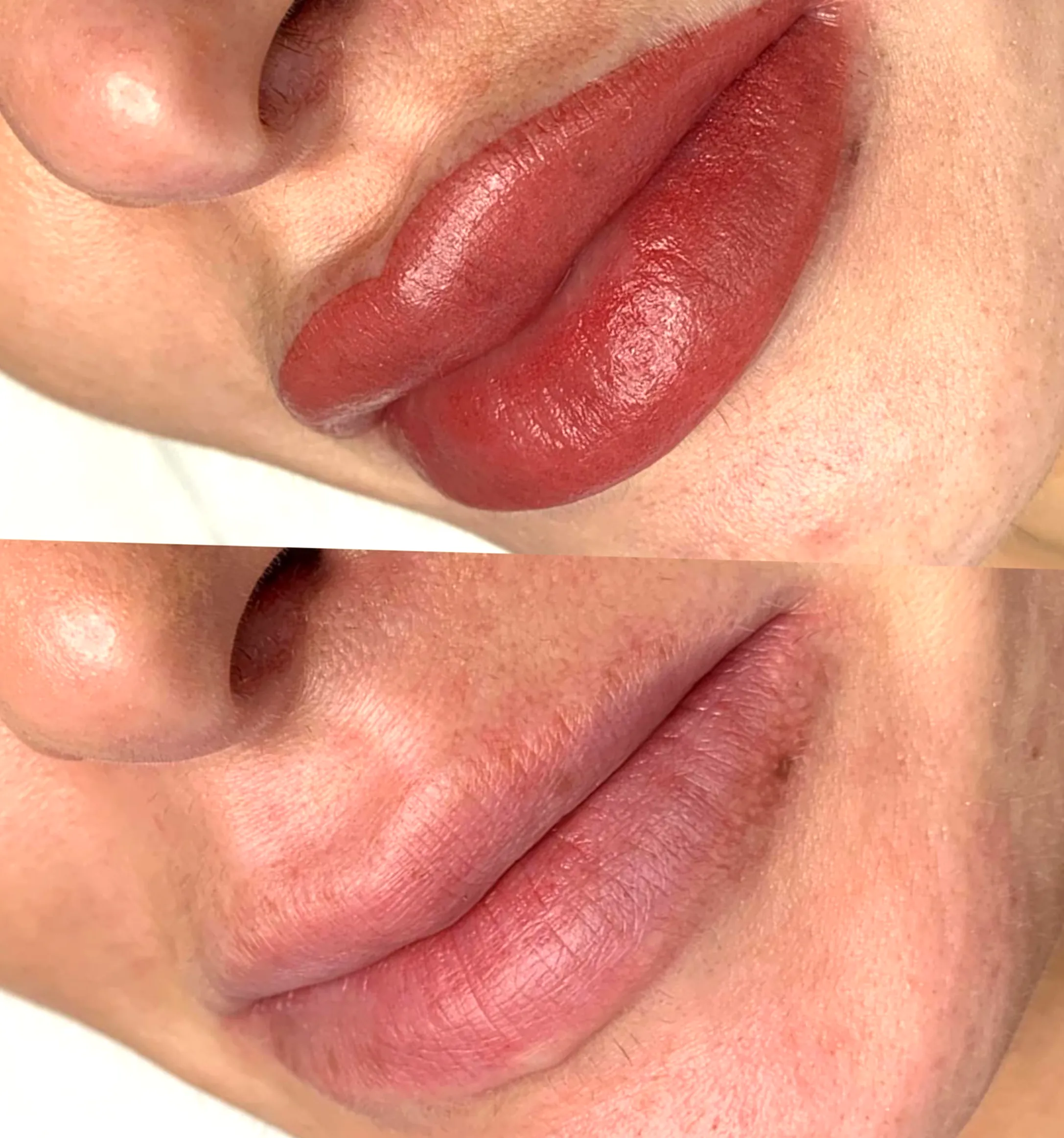
Sometimes a lip tattoo doesn’t “hold” the way you hoped, and it’s rarely about one single thing. Most results come down to a mix of skin behaviour, aftercare and cosmetic tattoo technique.
Think of your lips like a canvas. If the canvas is prepped right and the cosmetic pigments are pharmaceutical grade, a lip colour tattoo can last beautifully. If the canvas is oily, peeling, sunburnt from too much sun exposure or not ready for pigment implantation, your results can fade fast.
Common causes include:
- Skin type and lip tissue condition – Thinner, more vascular mucous membranes can push out pigment quickly.
- Aftercare missteps – Skipping aftercare balm or using lip gloss too soon can disrupt pigment deposit.
- Underlying health factors – Blood thinning medication, herpes simplex virus or keloid scars can affect pigment retention.
- Technique and equipment – Depth of pigment implantation, stretching techniques and tattoo machine speed all matter for lasting results.
The Healing — And Why It Matters
The healing process is where the magic and the problems happen. Lip blushing tattoos behave differently from brow or eyeliner work because lip tissue is delicate, highly vascular and part of the mucous membrane.
| Day | What You’ll See | What’s Happening |
|---|---|---|
| 1–2 | Swelling and bright lip colour | Pigment sits close to the surface, lip line appears sharper |
| 3–5 | Flaking, peeling, and dryness | Old skin sheds, pigment loss may look patchy |
| 6–10 | “Ghosting” phase | Pigment hides under healing tissue, colour stabilisation not yet complete |
| 4–6 weeks | Final colour reveal | Cosmetic pigment settles, and pigment retention is confirmed |
Tip: Many clients panic during the ghosting stage, thinking the tattoo ink has disappeared. In reality, colour stabilisation happens over time, and pigment becomes visible again by the end of the healing time.
Preparation Is Half The Battle
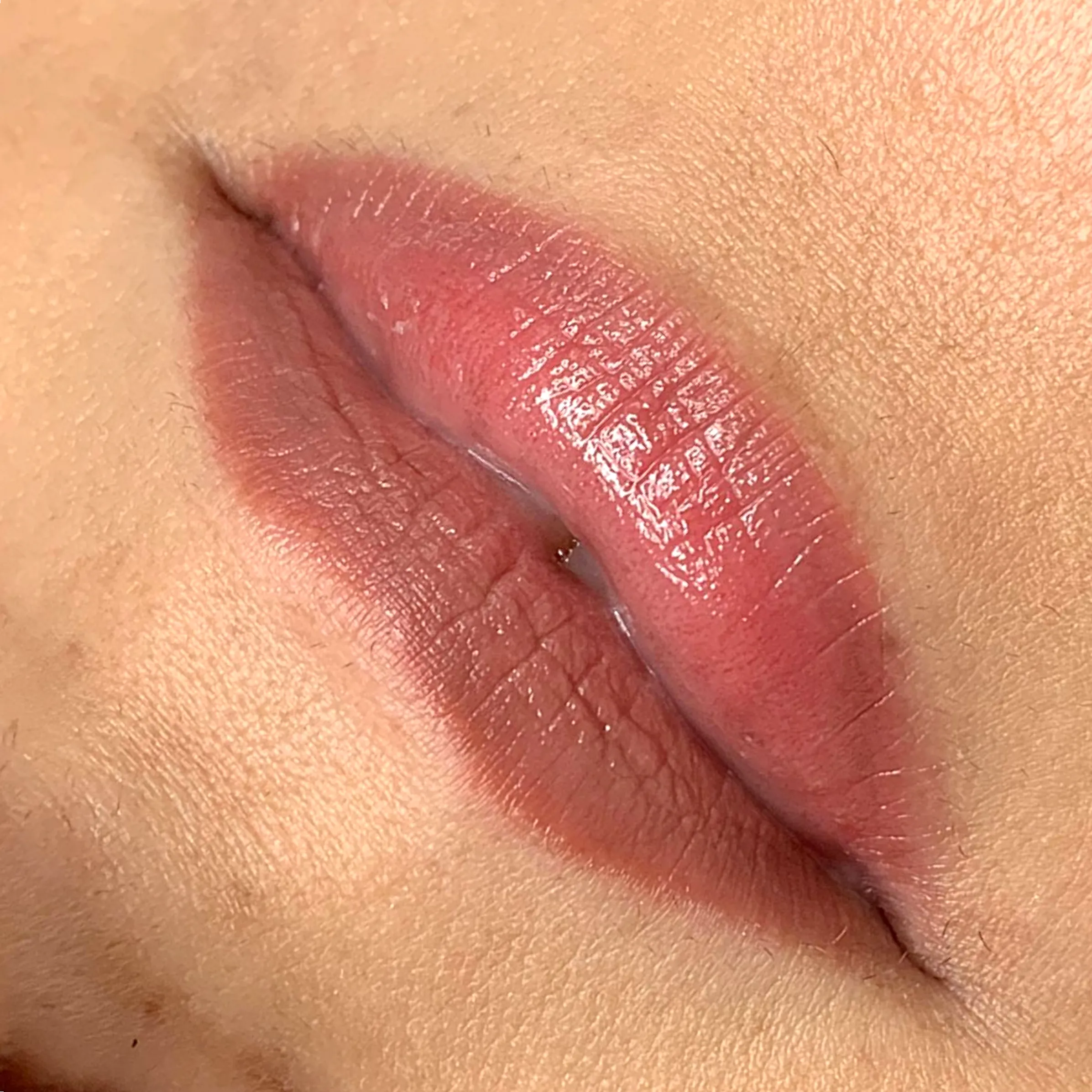
You wouldn’t paint a wall without cleaning and priming it first — same rule for PMU lips. The appointment process should always include a patch test, a discussion of cosmetic pigment options and aftercare instructions.
Our pre-treatment checklist for lip blushing:
- Hydrate inside and out – Drink water, apply a healing balm or lip balm regularly.
- No picking – Avoid dry, cracked lip tissue before tattooing lips.
- Avoid blood-thinning medication – Unless prescribed by your doctor. This reduces pigment migration and improves pigment implantation.
- Cold sore prevention – If you have a history of herpes simplex, take antiviral or anti-herpes medication before your session.
- Avoid active skincare – No salicylic acid or vitamin C serums on the lips before treatment.
- Discuss lip filler timing – Lip augmentation should be done at least 4 weeks before or after lip blushing tattoos to allow proper healing.
Technique And Materials Matter
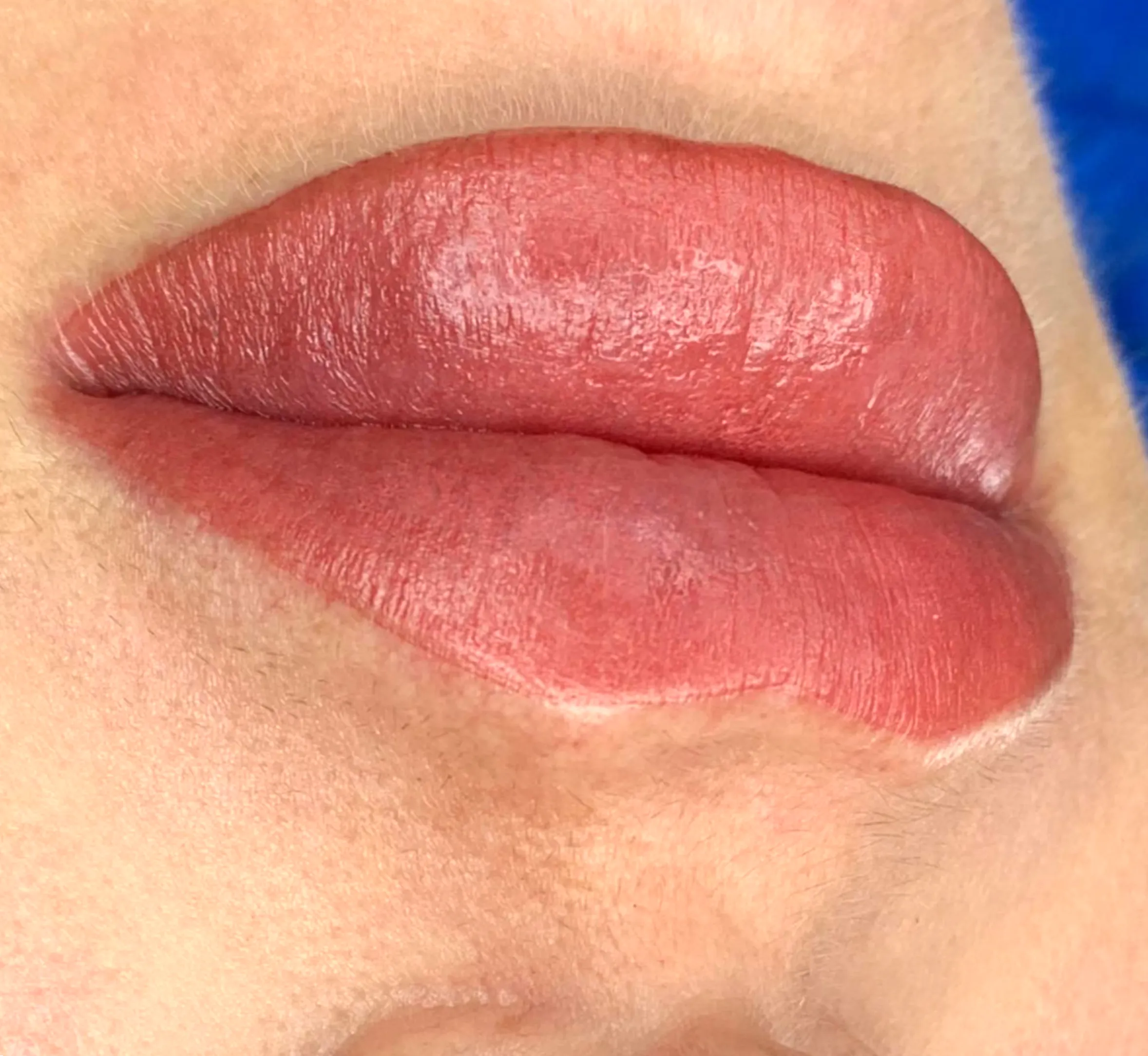
Even perfect aftercare balm use won’t save a lip blushing tattoo if the wrong cosmetic pigment, depth or tattooing procedure is used.
We’ve corrected many tattoos that faded or healed patchy because of:
- Pigment choice – Artists must understand colour theory to avoid poor colour stabilisation.
- Implanting too shallow – Leads to pigment loss when the top layer sheds.
- Going too deep – Causes scarring or pigment migration beyond the lip contouring zone.
- Stretching techniques – Poor tension on lip rolls can cause uneven pigment deposition.
- Machine settings – A tattoo machine must be adjusted for lip pigments to avoid overworking lip tissue.
Climate And Lifestyle Influences
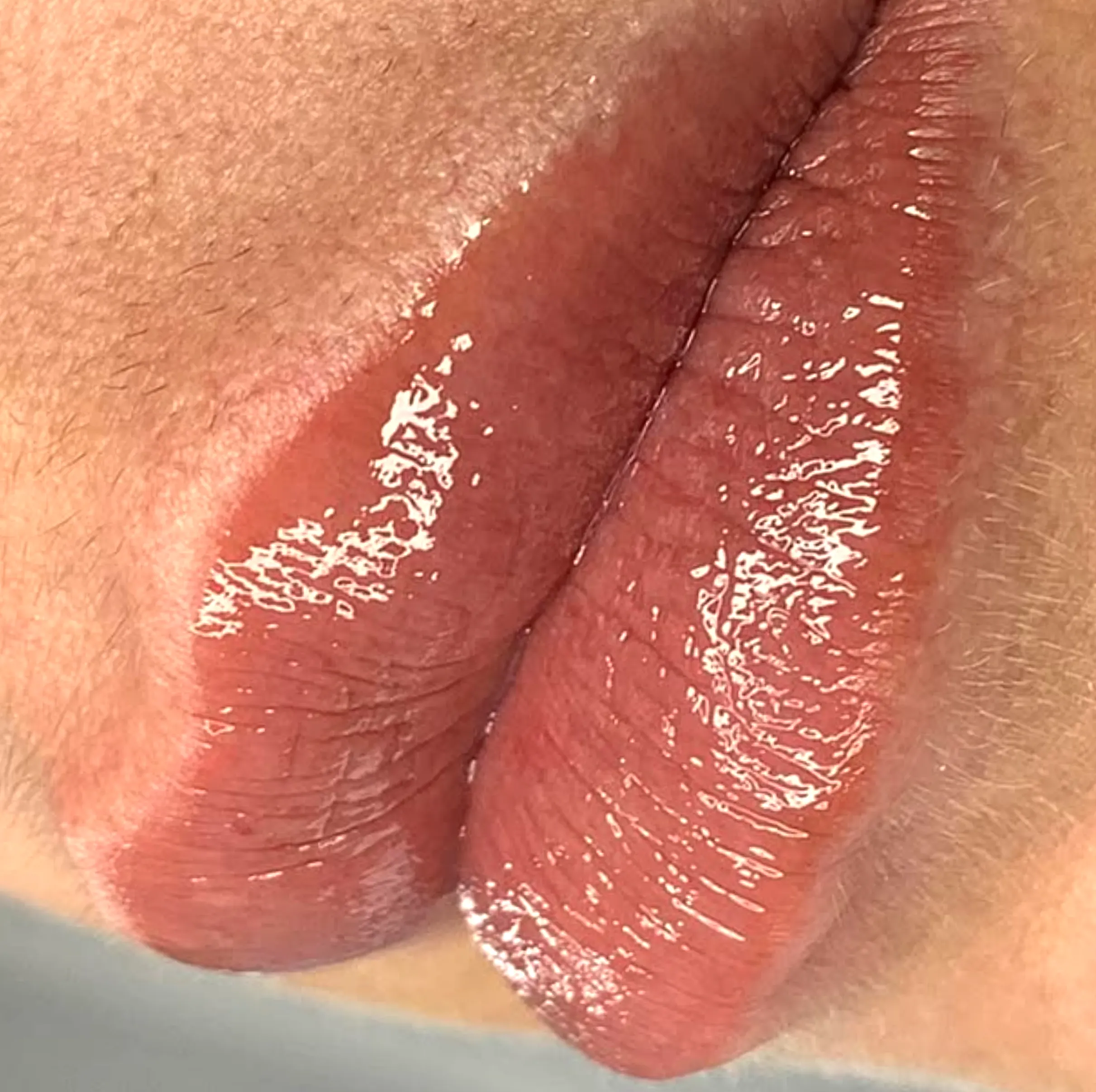
Living in Brisbane means your lips face heat, humidity and high UV almost year-round. All three can affect pigment retention for semi-permanent make-up.
- Humidity can keep lips soft, but also increases sweating during healing, which can push pigment out.
- Sun exposure fades tattoo ink fast, especially without daily SPF lip balm.
We recommend:
- SPF lip guards or SPF balm after healing.
- No swimming, long sun exposure and heavy exercise for 2 weeks.
- Book appointments outside of peak summer if you spend a lot of time outdoors.
Touch-Up Or Re-Work Signs
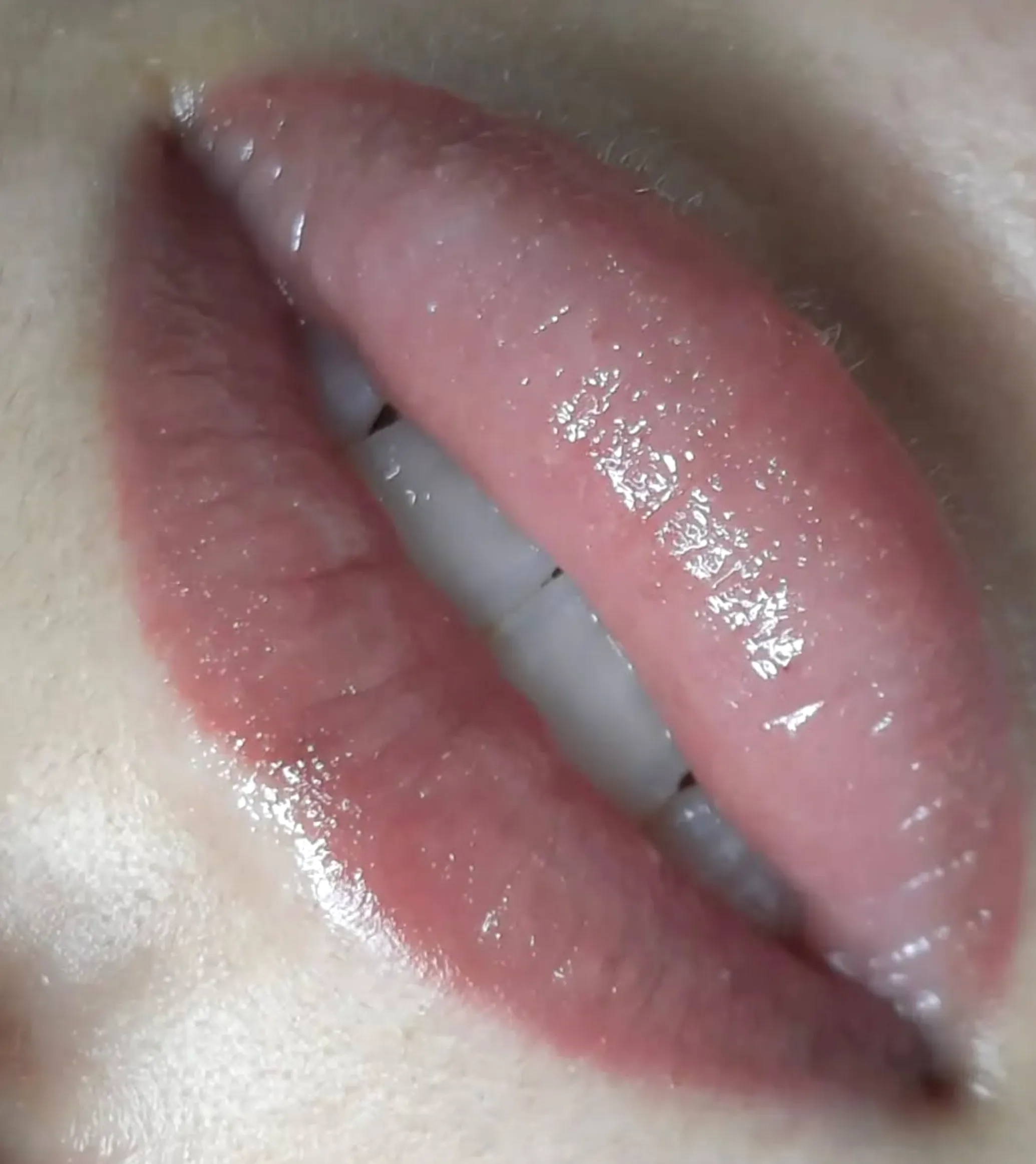
Touch-up:
- Slight unevenness in pigment deposit.
- Colour is lighter than planned, but evenly distributed.
- You’re within the touch-up window.
Re-work:
- Significant pigment loss or pigment migration.
- Unflattering healed tone due to poor colour theory application.
- Shape issues along the lip line or lip contouring.
2025 Beauty Data
The Australian Cosmetic Tattoo Association 2025 report found that 1 in 5 clients seek corrective semi-permanent makeup for lips after an initial session elsewhere. The top reasons were:
- Incorrect cosmetic tattoo technique (34%)
- Poor aftercare compliance (38%)
- Health factors like herpes simplex virus or medications (28%)
They also reported an increase in two-stage lip colour tattoo treatments — lighter first sessions and targeted touch ups for better pigment retention.
Common Myths About “Failed” Lip Tattoos
- Myth 1: A darker pigment lasts longer — retention is more about technique, depth and aftercare than shade alone.
- Myth 2: More pigment means better results — over-saturation can damage tissue, slow healing, and cause pigment loss.
- Myth 3: Cold sores ruin tattoos permanently — outbreaks can affect retention, but touch-ups can restore colour.
Lip Blush That Didn’t Last
If your lip blushing healed with little colour:
- Wait for final colour – Healing takes up to 6 weeks.
- Book a professional review – A cosmetic tattoo artist can assess pigment migration, loss and healing patterns.
- Be honest about aftercare balm use – Even missing a few days can impact pigment retention.
- Consider timing with lip filler – Fresh augmentation can interfere with pigment deposit.
How We Repair Poorly Healed Work
When a client comes in with a fading lip tattoo, our process is:
- Reviewing their salon policy history, medical conditions, and aftercare instructions.
- Analysing cosmetic pigment brand, tattoo ink type and pigment implantation depth.
- Offering solutions: targeted touch-ups, pigment correction or full re-pigmentation.
- In some cases, recommending laser treatments before re-doing the lip blushing.
Final Thoughts
If your lip blushing tattoo didn’t work, don’t give up. Whether it’s pigment loss from the healing process, cold sore complications or pigment migration from poor technique, there’s always a solution.
In Brisbane’s climate, lip blushing tattoos need the right preparation, aftercare routine and a cosmetic tattoo artist who knows about pigment retention, colour theory and PMU lips.
FAQ
Can I get my lips re-tattooed straight away?
No — healing must be complete, usually 6 weeks, before another tattooing procedure to avoid over-traumatising lip tissue.
Will cold sores ruin my results?
Not necessarily. With antiviral and anti-herpes medication before and after the appointment process, pigment loss can be minimised.
Does lip filler affect pigment retention?
Yes — always wait at least 4 weeks between lip augmentation and tattooing lips.
Can I have an allergic reaction?
Yes — rare allergic reactions to cosmetic pigment or aftercare balm are possible. Always do a patch test.
Is pigment migration permanent?
Not always. Corrective tattooing or laser tattoo removal can fix the lip contouring shape.